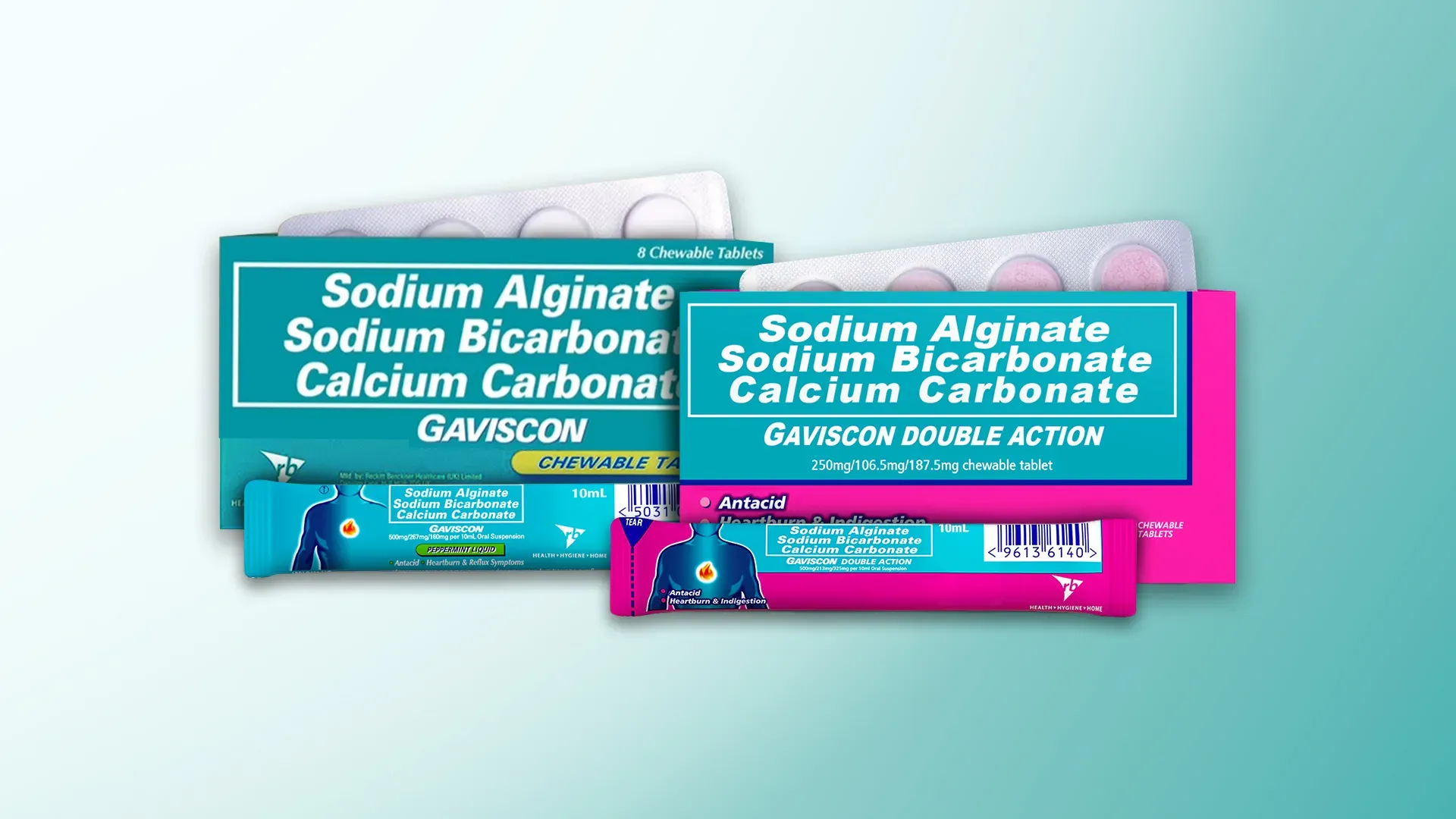


Gaviscon Double Action Sachets
Gaviscon Double Action Sachets

Relieves heartburn and indigestion
Addresses reflux and upset stomach

Works in as fast as 3 minutes (for heartburn)

Lasts up to 4 hours

View Gaviscon Double Action Sachets


Heartburn is a burning feeling in the chest caused by stomach acid travelling up towards the throat.

Have you ever felt a sudden in your chest? That tight, painful feeling can be so alarming that you might even wonder, "Is this a heart attack?"
Heartburn can strike at any time, forcing you to pause what you're doing and search for relief. It disrupts your day and keeps you from enjoying life's important moments.
Heartburn is a painful, burning sensation in the chest caused by acid reflux, where stomach acid flows back into your esophagus. Typically felt behind the breastbone, this pain can spread upward to your throat, neck, or jaw. Because the esophagus is close to the heart, heartburn is easily mistaken for a heart attack, and vice versa.1,9
Aside from a burning sensation in your chest and/or your throat, signs of heartburn commonly appear as the following symptoms:1
Heartburn can also manifest through:
Usually, heartburn symptoms are triggered shortly after eating and can last a few minutes or longer, depending on what caused it. Moving around after eating or taking antacids can help ease symptoms quickly.
Experiencing heartburn once in a while is usually nothing to worry about. However, if chest pain persists for too long or if you have heartburn several times a week, consult your doctor.
Anyone can experience heartburn. It occurs when stomach contents flow back up into your esophagus. A muscle called the lower esophageal sphincter (LES) controls this passage. When it doesn't function properly, acid reflux occurs, triggering heartburn.
Certain foods and drinks can relax the LES, leading to acid reflux and heartburn. Common triggers include:2
Other possible heartburn causes include:
The following actions can also trigger heartburn symptoms:
Whatever the cause of your heartburn, it’s important to find a remedy that works for you. While some heartburn symptoms may go away on their own, others may require the help of an antacid.
If you’re looking for heartburn relief, you can take Sodium Alginate + Sodium Bicarbonate + Calcium Carbonate (Gaviscon Double Action). It works by forming a protective raft over the stomach contents to help prevent acid from flowing back into the esophagus, while antacids neutralize excess stomach acid.
Sodium Alginate + Sodium Bicarbonate + Calcium Carbonate (Gaviscon Double Action) Liquid provides heartburn relief in as fast as 3 minutes and lasts up to 4 hours10. It is intended for adults and children aged 12 years and above.
Making simple lifestyle changes can help prevent and manage heartburn. Here are practical steps you can take to reduce discomfort and find relief:1,9
To reduce your heartburn symptoms, try to avoid the following triggers and habits:1,9
Following these tips will help you manage heartburn. For quick relief of heartburn symptoms in a fast as 3 minutes that lasts up to 4 hours, try Sodium Alginate + Sodium Bicarbonate + Calcium Carbonate (Gaviscon Double Action) Liquid.10
Before taking this medication, always read the label carefully. This medicine contains sodium and calcium. If you're on a sodium or calcium-restricted diet, consult your doctor before taking this product.
Do not use after the expiry date listed on the package (month/year).
When to seek medical attention: If symptoms persist for more than 7 days, consult your doctor.11
ASC Reference No. R0042N091426G
To help prevent acid from rising into the esophagus and causing discomfort, Sodium Alginate + Sodium Bicarbonate + Calcium Carbonate (Gaviscon) products contain sodium alginate, which forms a protective barrier over the stomach contents. It also contains antacids that help neutralize excess stomach acid.
With this dual-action approach, Sodium Alginate + Sodium Bicarbonate + Calcium Carbonate (Gaviscon) provides effective relief from acid reflux and heartburn symptoms, helping you get back to enjoying life without interruption.
Dosage for adults & children 12 years old and above: Take 10-20 mL (1-2 sachets) of Sodium Alginate + Sodium Bicarbonate + Calcium Carbonate (Gaviscon) or Sodium Alginate + Sodium Bicarbonate + Calcium Carbonate (Gaviscon Double Action) after meals and at bedtime.
For tablet formulations, take 2-4 tablets of Sodium Alginate + Sodium Bicarbonate + Calcium Carbonate (Gaviscon) or Sodium Alginate + Sodium Bicarbonate + Calcium Carbonate (Gaviscon Double Action) after meals and at bedtime, as directed.
All information presented is not meant to diagnose or prescribe. If symptoms are severe or prolonged you should consult a doctor or pharmacist. Always read the label.
Relieves heartburn and indigestion
Addresses reflux and upset stomach
Works in as fast as 3 minutes (for heartburn)
Lasts up to 4 hours
View Gaviscon Double Action Sachets
Relieves heartburn and indigestion
Addresses reflux and upset stomach
View Gaviscon Double Action Tablets
Relieves heartburn and reflux symptoms
View Gaviscon Original Sachets
Relieves heartburn and reflux symptoms
View Gaviscon Original Tablets
Heartburn and hyperacidity can greatly interfere with your daily life.
Manage Acid Reflux And GERD Without Giving Up Coffee. Learn Symptoms, Alternatives, And Relief
Learn How To Manage Persistent Heartburn, Its Causes, Treatments, And When To See A Doctor
Learn About Acid Reflux, Its Common Signs, And Treatment Beyond Throat And Stomach Pain
Manage GERD At Night For Better Sleep With Tips On Positions, Lifestyle Changes, And Relief Options
Learn When Acid Reflux Becomes Serious, When To See A Doctor, And Tips For Prevention And Relief
Manage heartburn with treatments, OTC meds, lifestyle tips, and when to see a doctor.
Learn The Signs Of Severe Heartburn And Hyperacidity And When To See A Doctor
Learn What Causes Heartburn, Its Symptoms, Triggers, And How To Relieve It With Gaviscon
Manage acid reflux with diet tips, foods to avoid, and relief options like Gaviscon.
Learn indigestion symptoms, causes, and treatment options to manage daily discomfort.
Manage acid reflux with lifestyle tips, OTC remedies, and know when to see a doctor.
Alamin ang mga karaniwang sintomas ng acidity sa mga babae at paano ito maiiwasan.
Alamin ang mga karaniwang sanhi at lunas sa acid reflux o pangangasim ng sikmura.
Discover what causes indigestion and learn tips like diet and lifestyle habits to avoid symptoms.
Learn the root causes of heartburn and prevention tips to manage symptoms and improve digestion.
Does buko juice help relieve acid reflux symptoms? Read to learn more.